by WebPost | May 23, 2016 | Peace and Social Concerns
Quaker House recently published a book of healing strategies for moral injury, Help for Moral Injury: Strategies and Interventions. Cecilia Yocum, PhD, volunteered to write this after attending one of their presentations in Tampa, FL. It is available through Amazon or by contacting QH at qpr@quaker.org or 910- 323-3912. We hope it will be a help to our service members and veterans! Please share this!
In the United States we have been late to recognize and provide supportive services to victims of post-traumatic stress disorder, and are only beginning to recognize a need to address moral injury – debilitating guilt, shame and self-condemnation secondary to inflicting violence State- sanctioned or otherwise, on others. Both exist. Both haunt our society. The strategies and interventions provided in this booklet set forth a means of addressing the injuries to an individual’s moral codes. The conflict or tension with one’s personal codes and that of armed conflict and the aftermath may create conditions which can make it difficult to return to “normal” life.
The strategies and interventions provided here are opportunities for individuals to identify, address, and manage those conflicts or tensions through a structured process and, above all, in a safe supportive environment. The emphasis is on recognizing that agents of injury also suffer, identifying the nature of their emotional and spiritual injuries, and providing a safe environment to facilitate healing. These activities will help those with moral injury develop some tools to work toward the goals listed above along with other goals of understanding moral injury, self- care, and developing personal and spiritual resources. These exercises/activities are designed to be used by counselors/pastoral counselors, psychologists or other mental health workers.
Cecilia Yocum received her Ph.D. in psychology from Ohio State University in 1978. She has over 35 years of experience working with individuals, families, communities, and professional groups and has worked overseas with community-based trauma healing programs in Rwanda, Burundi, and Colombia as a part of Friends Peace Teams. Dr. Yocum has been actively involved with Alternatives to Violence Project workshops, is a past board member of the Florida Center for Survivors of Torture, and has provided psychological evaluations for political asylum seekers. Lynn Newsom, Quaker House co-director, wrote the introduction.
by WebPost | May 10, 2016 | Peace and Social Concerns
In March, the Meeting minuted support of six youth (Emma Blake, Max Thoburn, Dorsey Crocker, Justin Sykes, Jordan Keller and Olivia Duncan) who had shared their written personal statements of conscience. As follow-up to this moving testimony, members and attenders were invited to write their letters of support on behalf of these youth. Such letters will be housed in Meeting archives and available to the youth in the event they are called up by Selective Service for the military.
In April, members and attenders were given additional information for writing their letters of support. At the request of members who earlier asked to read the statements again in preparation for their letter-writing, students asked that these not be placed on the website or in the newsletter for privacy concerns. Instead letters will be maintained under the foyer bulletin boards in a white notebook for members to re-read on Sunday mornings over the next month. Extra copies of statements may be taken home if you wish to have such in front of you when you write. Statements will also be available at the April 22 coffee house sponsored by RE.
Please address your letter either (1) to the student by name or (2) to the Clerk of Richmond Meeting on behalf of the student. Be sure to include the student name or names. Letters can be any length. If you wish to include something you know personally about the youth, please do so. Be sure to date and sign your name. Regretfully for letter writers, a letter on behalf of all six youth does not work. If a youth wishes to use them for Selective Service business at a future date, other names would be contained in the supporting document and would violate the privacy of those youth.
Please leave your support letters in the Historian’s mailbox hopefully by the May 15 Meeting for Worship with Attention to Business. Your letter(s) of support will be shared with each youth over the next few months. For questions, please email or call Betsy Brinson.
by WebPost | Apr 27, 2016 | Peace and Social Concerns
The following is an excerpt from letter from Shan Cretin, General Secretary, American Friends Service Committee (AFSC).
No other country imprisons more people than the United States. In 2014 over 1.5 million people were incarcerated in the U.S. at a cost of $80 billion—approximately $51,250 per person imprisoned. The U.S. has just 5% of the world’s population, but the number of people behind bars in our country makes up 25% of the entire world’s prison population.
This incarceration epidemic is a moral crisis that hits hard on communities of color and the poor. Imagine if just a fraction of the billions being spent on mass incarceration was directed towards public schools, substance abuse treatment, mental health services, job training, and other services to keep people out of prison.
For information about AFSC’s efforts to end mass incarceration and how you can make a donation, visit the AFSC website.
by WebPost | Apr 27, 2016 | Children and Religious Education, Peace and Social Concerns
For Grade 6 and above: Richmond Youth Peace Summit Saturday, April 30, 2016
The Richmond Peace Education Center will hold its 2016 Youth Peace Summit on Saturday April 30, 2016, at St. Paul’s Baptist Church–Southside Campus, 700 E Belt Blvd., Richmond, VA 23223. The summit will feature a morning large group session, as well as 90-minute small group workshops for groups of about 12-15 teen participants.
Participants will also be served lunch; after lunch there will also be a program of music, dance and spoken word poetry. The event is FUN and FREE for teens grade 6 and above. Advance registration is required. To pre-register online, go to the registration page or send an email to rpec@rpec.org.
The summit emphasizes cooperation and collaboration among Metro Richmond’s diverse populations of young people. Small group workshop choices include conflict resolution, anger management, healthy relationships, understanding Islam, hip-hop dance and culture, drumming, know your rights, Sudanese cooking and more! All workshops are active and participatory.
For more information: email rpec@rpec.org or call 232-1002
by WebPost | Mar 10, 2016 | Adult Spiritual Education, Peace and Social Concerns
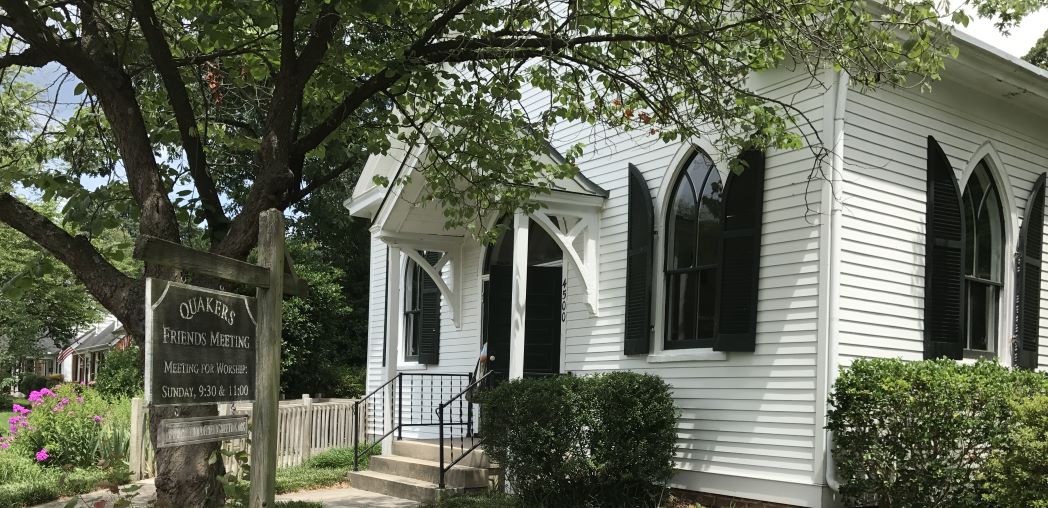
Joyce Ajlouny, Director, Ramallah Friends School, Ramallah, Palestine, will speak at event titled “Education Under Occupation: Friends Preserving Hope and Dignity” on May 1, 12:30 pm. The event will be held in the Community Room at the Meetinghouse at 4500 Kensington Avenue.
Snacks will be provided.
For background about the speaker and the school, see the event listing on the Calendar page of this website.
by WebPost | Jan 28, 2016 | Peace and Social Concerns
The Disaster Relief Group going to South Carolina in March will hold a chili luncheon on March 6. It will be an opportunity for you to eat a tasty lunch, contribute financially, and meet the people going.
If you cannot attend and would like to support the trip, you can write a check to Richmond Friends Meeting with a note that it is for the Disaster Relief trip. Individual volunteers will pay their own expenses for the trip. Donations will go to support the work of the group.
The state of South Carolina had heavy flooding in the unprecedented rains in October 2015. The group of volunteers will represent Richmond Friends Meeting in this effort and will be hosted and sponsored by the United Methodist organization, UMCOR.
If you are interested in joining the group, contact Ada Hammer or Frances Stewart.