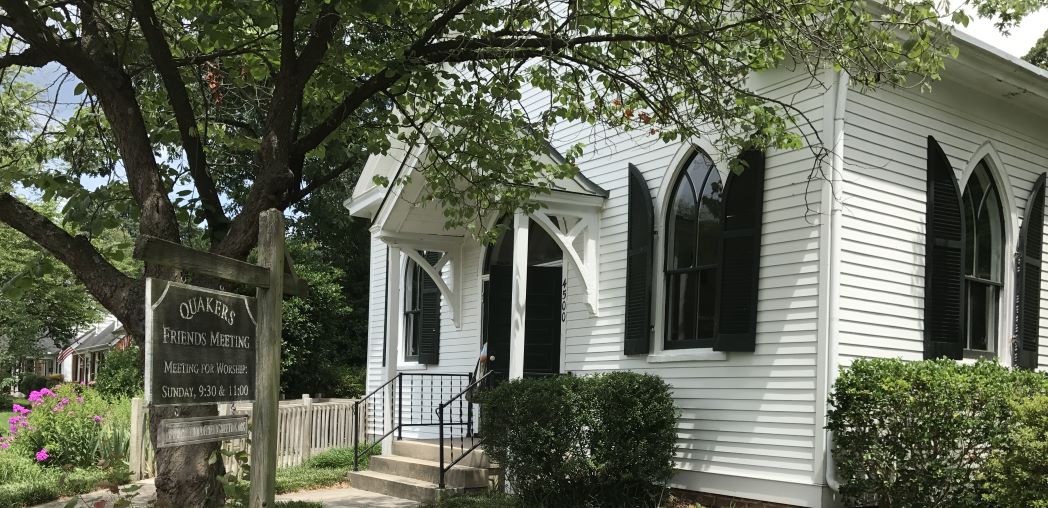
Friends Association For Children and Richmond Friends Meeting
By Donna Knicely, member of the History Committee
If you have lived in Richmond very long at all, you have probably heard of the Friends Association for Children. And, as a Quaker, you have probably wondered what the connection is between the two. The following history was provided by staff of the Friends Association for Children.
Friends Association, currently located at 1004 Saint John Street, was founded shortly after the Civil War. A group of black civic workers, the Ladies Sewing Circle for Charitable Works, recognized the need for an orphanage for black children who were left homeless following the War. Turmoil surrounding the abolition of slavery left many children in the Richmond area without parents, relatives or guardians.
Mrs. Lucy Goode Brooks, the Sewing Circle leader, convinced the members of her group that support was needed from community groups to undertake the project. She sought the endorsement and financial aid for the orphanage from the Richmond Society of Friends. It is believed that Society was approached because some members of the Sewing Circle had lived with Quaker families before and during the War and recognized their humanitarian interest in the less fortunate and oppressed. The group was also aware of the financial contributions Quakers had made to the education of black children in other communities.
Under the direction of John Baker Crenshaw, the Quakers became active in the effort to find relief for black orphans in Richmond. Mr. Crenshew was the minister of the Richmond Society of Friends and grandfather of former Judge J. Hodge Ricks of the Juvenile and Domestic Court. The Quakers agreed to sponsor the orphanage project and raised money in Virginia and in the Northern States. On August 12, 1867, the Richmond City Council voted to deed the “Old Orphan Asylum” lot at the corner of Saint Paul and Charity Streets to the Trustees of the Society of Friends for the construction of an orphanage for black children. The building was completed in 1871, and the Friends Asylum for Colored Orphans was incorporated by the Virginia General Assembly on March 26, 1872.
The organization was governed by white trustees until 1889. At that time, the composition of the Board of Trustees was altered to include only representatives of black, Richmond area Baptist churches. The number of trustees was determined by the financial support provided by each church. In recognition of this change, the Richmond City Council deeded the property to the Friends Asylum for Colored Orphans. Increased funding was granted to the Asylum in 1926 following a study by the Community Fund and the Child Welfare League of America, which concluded that the orphanage was vital to the city. After another study in 1929 it was determined that foster home care was more needed than an orphanage. In 1931 the orphanage was closed and the group became a foster care agency under the supervision of the Children’s Aid Society of Richmond.
In 1932 after separating from the Children’s Aid Society, the group was renamed the Friends Association for Colored Children. About this time services began to change in order to respond to the needs of the community. An adoption service was started in 1938 and a program providing counseling services to children in their homes was initiated in 1940. In 1947 Friends Association began the evolution of its current Child Care Program by opening the Community Day Nursery. In 1955 the foster care program was replaced by a pre-adoption boarding home and services for the unwed mother.
Today the Friends Association for Children is guided by three basic tenets: “child care is our business, the family is important to us, and we make it possible for children to reach their potential.”
