by WebPost | Mar 24, 2022 | Announcement
In recent weeks, many have become more relaxed about COVID, partly because many more of us have some degree of immunologic protection from the virus, both from vaccination, and the recent omicron surge, which seems to decrease risk of severe disease, hospitalization, and death from COVID. Still, omicron still circulates and newer variants continue to be extremely transmissible.
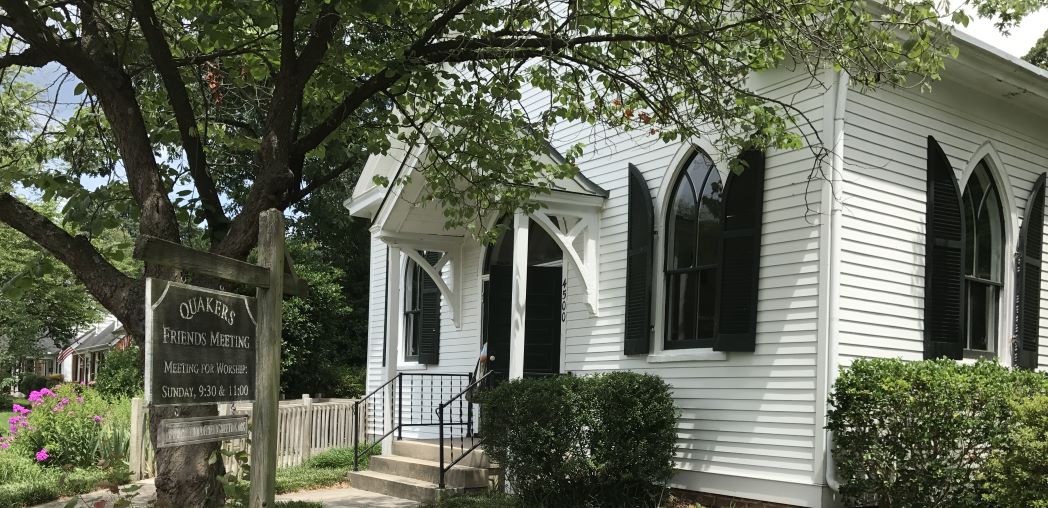
As the COVID situation continues to change, we as a Meeting are staying the course, continuing our December Meeting for Business decision to use Virginia Department of Health (VDH) guidelines for risk assessment and corresponding recommendations for risk mitigation as the framework for developing guidance for use of the Meetinghouse during this time. We remain open to changing strategies as the COVID situation changes.
-- The three key mitigation tools are still masking, ventilation, and distancing. Committees responsible for group use of the meetinghouse are tasked with figuring out how best to implement those strategies for the level of risk in our locality at a given time. Ministry & Worship Committee’s deliberations have been most evident, since they are responsible for worship gatherings. They are considering risk and responsibility very carefully, leading to opening, closing, and re-opening in-person worship. Also by experimenting with taping off benches to
encourage adequate distancing.
-- With the VDH framework, Richmond and surrounding counties have remained in the “substantial” community transmission brackets. RFM has aligned with VDH and will remain so. When we move to a safer bracket, we will take appropriate action. Though not quickly, given Covid’s ability to change quickly.
-- The Centers for Disease Control (CDC) is now putting much greater emphasis on the burden on a community’s health care systems, reflecting that Omicron has caused more cases, but fewer hospitalizations. In the CDC system, communities are sorted into low, medium and high levels, and Richmond and surrounding counties have tended to be low or medium. https://www.cdc.gov/coronavirus/2019-ncov/science/community-levels.html,
-- While the new CDC brackets may be useful in your personal decisions, RFM remains committed to the VDH definition and recommendations. Ours must be a corporate rather than individual decision, recognizing that many of us are older and, for instance, statistically 80% of those over 65 have diabetes, heart conditions, or other issues that weaken their immune systems, even though they qualify for immunization. At the same time, we
strive to make in-person gathering a viable decision for as many of our community as possible.
The Covid Working Group applauds and appreciates everyone’s patience and offers any help we can provide as committees and others in meeting evaluate risk and implement strategies that continue our communal decision
by WebPost | Mar 24, 2022 | Announcement
Join us on Zoom this Sunday, March 27, 4-5:30
The struggle for Virginia and Maryland Quakers to unify against the owning of enslaved peoples was a process that took over 100 years. Jim Fussell, a BYM historian, shares some slices of that struggle in his presentation Black Resistance in Quaker Enslaver Households in Maryland and Virginia: He will explore examples and patterns of ‘slave resistance” by Black people enslaved by white Quaker enslavers. These actions helped precipitate an internal crisis and struggle among Chesapeake Region Quakers, who eventually disallowed slaveholders from remaining in membership as Quakers.
This workshop is one of four presentations created by BYM Quaker historian, Jim Fussell, as a way of marking the 350 Anniversary of BYM.
Link will be sent out later in the week on Newslist
by WebPost | Mar 24, 2022 | Announcement
Final Opportunity to Review RFM's Legislative Priorities for Submission to FCNL
Please review these and send any feedback to Barbara Pedrotty (gracepeds@yahoo.com) by March 31st. At the recommendation of Meeting, the last two priorities listed here were added to the four that were presented to the March Meeting for Business.
Support legislation to abolish the Selective Service and to restructure the budget so it more robustly bolsters diplomatic initiatives and efforts to de-escalate conflicts.
Revitalize our democracy with legislation to promote campaign finance reform and not only protect voting rights but strengthen them, with the priority of ensuring easy and convenient access to the ballot box for those in marginalized communities.
Promote legislation that repairs and strengthens the social safety net so all workers can earn a living wage, and food security, housing and universal healthcare become every citizen's right.
Support legislation to dramatically reverse climate change, helping to eliminate potentially violent disputes over ever more limited resources like potable water and arable land while minimizing hostilities aimed at refugees forced to flee climate-induced disasters.
Advocate for legislation that encourages commercial farmers to use fewer herbicides, pesticides, and hormones in producing food, which will not only provide healthier products for consumers but simultaneously slow down climate change and the ongoing degradation of the Earth.
Push for the passage of legislation that finally establishes a commission to study reparation proposals for African Americans, and support similar initiatives for Indigenous Americans.
by WebPost | Mar 3, 2022 | Announcement
The Meeting House is open to in person worship beginning March 6th. 9:30 Meeting for Worship, 11am Blended Meeting for Worship, and monthly Meeting for Worship at the Clearing.
Masks recommended and social distancing required.
by WebPost | Apr 21, 2021 | Announcement
When we return to the building, some RE classes will be making collages. The teachers are asking all of you to
keep magazines with pictures of people, nature, multi-cultural images, food, etc. Please put the magazines aside
now and we'll pick them up later or you'll be able to bring them in, once we return.